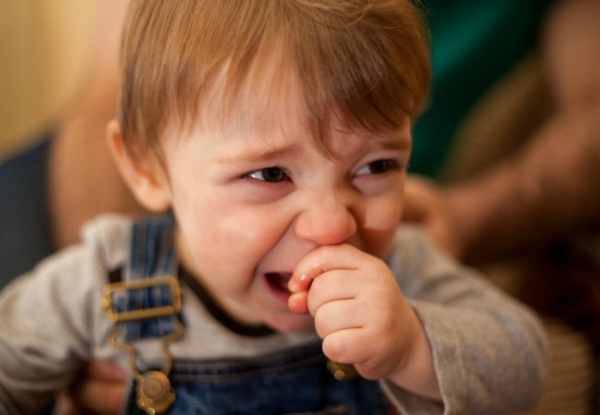
When toddlers become aggressive and hit, bite, and hurt others, parents quickly become alarmed. Rest assured that although this behavior is certainly not what we want to see in our kids, it is normal. It doesn’t mean that your child is bad or has an anger problem. It simply means that your child has an immature brain that cannot process the flood of emotion he or she is experiencing. It isn’t naughtiness that drives aggression – it’s frustration or fear. That’s an important distinction because when we see a child as being frustrated or afraid instead of mean or bad, we are moved to respond with compassion rather than anger.
Skip the Punishment
It’s clear that spanking makes kids moreaggressive, and time-out doesn’t work either. According to Jessica Grogan, PhD, “research suggests time-outs may have detrimental neurobiological effects comparable to those of spanking.” The relational pain caused by time-out is very similar in the brain to the physical pain caused by hitting a child. That’s because “social isolation and rejection are experienced as shame,” says Mary Lamia, PhD. “Shaming experiences lead children (or adults) to believe their entire self is bad rather than just their behavior…In order for the child to cope with shame, he or she will typically respond by attacking oneself, attacking others, withdrawal, or avoidance.” Punishment causes more problems; it doesn’t solve any. Discipline is not the same as punishment. Discipline is about teaching a child how to do better.
Addressing the Aggressive Behavior
The two most important things to remember is 1) do no harm and 2) be mindful of what you are modeling. What do I mean by “do no harm?” Don’t respond with your own aggression which will scare or further frustrate your child. Don’t isolate, smack, shame, or punish. These actions cause either physical or emotional harm that only make the problem worse. While the behavior may appear to stop in the short-term, your child will only learn to suppress their feelings and those feelings do not just go away. Bad feelings eventually manifest in one way or another and could lead to anxiety, trouble sleeping, tantrums, etc.
The second important point is to be mindful what you are modeling. Some parents are advised to bite their child back which only models the exact behavior you’re trying to correct! And yes, I’ve heard parents say “well, it worked” and maybe the child didn’t bite after that, but I’m certain that the alarm of being bitten by their parent who is supposed to protect them from harm showed itself in some other way. If we want to raise children who are able to manage their emotions and behavior and to respond with gentleness to others, then we have to be that first. Children learn by our example far more than they learn by our lectures.
Concrete Steps:
- Prevent when possible. Study your child’s behavior. Know the cues that indicate he or she is about to hit or be aggressive in some way. When you see these cues, get close. Gently block the hit and provide safety for everyone. This will likely cause more frustration and may lead to a meltdown, and that’s ok. Those feelings of frustration need to come pouring out. The goal is to let your child safely express those feelings. I know you want your child to learn not to have a tantrum when things don’t go her way, and she will! Her brain will mature and she will gain control of executive functions in time, but you cannot punish maturity into her. You can only be there to support her and provide the best conditions in which mother nature can do its job.
- Listen with empathy. Remember, this is a child who is hurting in some way, not a naughty child. With that in mind, you can be empathetic to his experience. Listening is a powerful positive discipline tool. I wish we hadn’t been fooled into believing that staying close and providing emotional support and unconditional love is somehow going to reinforce bad behavior. Those are the very things that help a child heal and do better.
- Do time-in instead of time-out. During a time-in, you simply get your child out of the situation by bringing them to a designated calming area in your home or even onto your lap or in a chair beside you and help them to calm down. Read my article on how to use time-in here.
- Discuss better ways to express frustration and anger when your child is calm and receptive. It takes a while for children to be able to manage their emotions. Even adults have difficulty doing it sometimes! But by talking with your child about ways he or she can do better, you’re giving them the vocabulary to help them express themselves and giving them real tools they will eventually be able to use. Trust that she’ll get it in time, and always tell her how much you believe in her!