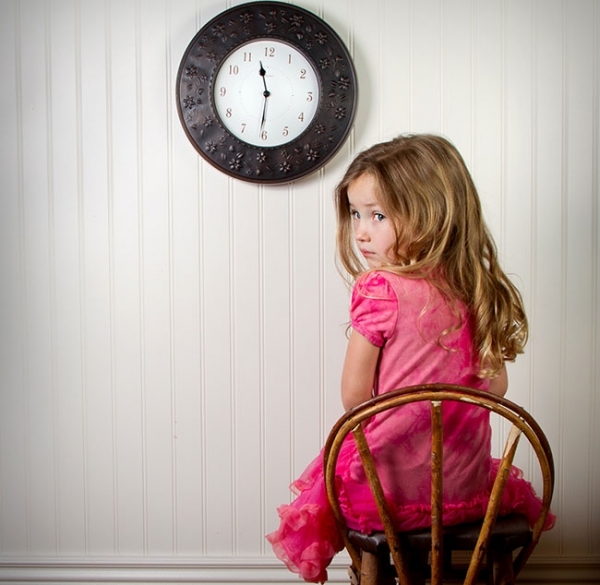
Time-out is a popular technique for dealing with undesirable toddler behavior, but is it really best for the child? In Time Outs Are Hurting Your Child, doctors Tina Payne Bryson, Ph.D., and Daniel Siegel, M.D. tell us that the latest research suggests sitting alone in that chair is doing more harm than good.
When I learned that time-outs didn't work for my highly sensitive boy almost 6 years ago, I was led to look for an alternative for correcting his behavior. I found that a calm down area was much more effective for my sensitive son, and it worked just as well with my non-HSC (highly sensitive child) too.
What is a calm down area for?
This is a place for a child to go either with the parent or willingly alone. It is not a punishment but a place to learn emotional intelligence followed by learning better behavior. What I've learned about children in my years of research is that their brains do not take information in when they are dysregulated (or very upset). During times of emotional upset, children are functioning from their lower brain (which controls the fight, flight, or freeze response) and need to calm down before they can access their higher brain (responsible for logical thought and reasoning). Therefore, the calm down area should be a soothing place for the child to engage their higher brains so they can then best learn the lesson we want to teach.
Wait, isn't that a reward for misbehavior?
Think of it like this. When you get angry and are about to blow up at your child or spouse, do you take a few minutes to calm yourself first? You should. That ensures you are able to respond thoughtfully rather than react irresponsibly. When you take that time to breathe or repeat a mantra or go to the bathroom, you're essentially going to your own calm down area, even if just in your mind. Is that a reward for your anger? No. Does taking that little break in the bathroom make you want to get angry more often? Of course not. No one likes feeling out of control. We all need to learn how to take time to calm our brains down so we don't react, and it's best to start learning that as young as possible.
What's the difference? Don't they learn to take that break in the time-out chair?
The difference is that the parent acts as an emotional coach in the calm down area. We talk through the emotions that the child is feeling and discuss ways to calm down and regulate our brains. A toddler isn't able to process all of that alone in a chair. Furthermore, sitting with a nose in a corner doesn't help most children calm down and often fuels the negative emotions. They may even feel rejected or isolated. Certainly, they aren't thinking about what they will do better next time, and even if they can repeat why they just had to sit there for 4 minutes, did they really learn what triggered their strong emotions or how to handle them better? Knowing what not to do is not equal to knowing what to do.
Related Article: Three Alternatives to Time Out
What goes in the calm down area?
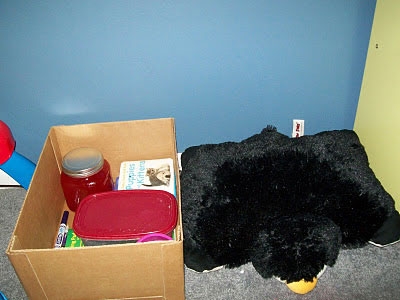
What you put in your calm down area is unique to your child. Find items that will suit them best. One of my children liked to draw or be read to and the other liked to pop balloons to calm down. I kept a box with several books, a glitter and water jar to shake, pencils and paper, rice for sensory play and balloons in our calm down area, along with a comfortable pillow to sit on.
Our Calm Down Area at home looks like this:
How do you use the calm down area?
When your child either does something wrong or is experiencing heavy emotions like anger, take her to the calm down area immediately. Name the feeling you think she's experiencing and talk about what triggered it. You may say, “You're feeling mad because he snatched your toy. You were mad so you pinched him. I won't let you pinch because that hurts. I'll help you calm down.” Then, engage the child in the tools you've placed in the calm down area until you see her anger subside. Once her thinking brain is back online (when she's calm), talk about what anger feels like coming on and how to handle it in that moment. Give her real ideas she can use the next time someone snatches her toy, such as assertively asking for it back, walking away to get an adult, or taking a giant breath and blowing it out. It takes practice, and it won't be a one time deal, but neither is the time-out chair.
As she gets older, she will likely begin going to her calm down area herself as she learns the valuable skill of emotions regulation, especially if it's been modeled by her adult caregivers as well as taught with consistency in her early years.
Resource: Time.Com