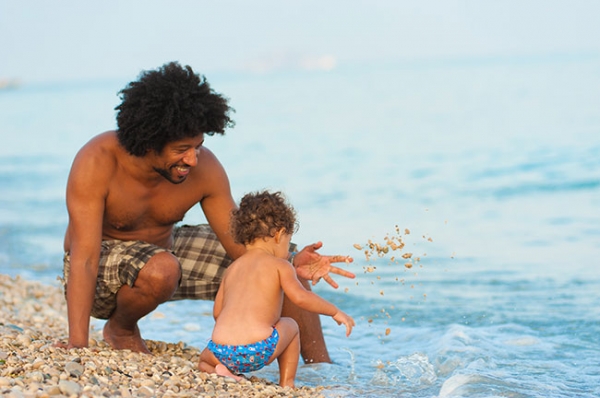
A family beach day can be equal parts adventure, relaxation, and full-on kid entertainment. With a little preparation, the shore becomes an easy setting for active play, sensory exploration, memorable photos, and a much-needed break from the usual routine.
Whether you are bringing a baby for their first glimpse of the ocean or entertaining older kids between swims, this guide will help you pack smarter, stay safer, and make the most of your time by the water.
Start With Sun and Water Safety
The beach is more enjoyable when everyone has a comfortable place to cool down, recharge, and take breaks from the sun. Before packing toys and snacks, build your day around shade, hydration, supervision, and a clear family plan.
Choose the right sun protection
For children 6 months and older, look for sunscreen that is broad-spectrum, water-resistant, and SPF 30 or higher. “Broad-spectrum” means it protects against both UVA and UVB rays. Apply it before heading outside, then reapply at least every two hours—and sooner after swimming, sweating, or towel drying. The American Academy of Dermatology has a useful guide to choosing sunscreen.
Babies younger than 6 months should be kept out of direct sunlight as much as possible. A beach tent, stroller canopy, umbrella, lightweight long-sleeve clothing, and a brimmed hat are especially useful. The CDC recommends relying on shade and protective clothing for young infants rather than routine sunscreen use. Read the CDC’s sun-safety guidance for children before you go.
A good beach-day sun routine includes:
-
Sunscreen for exposed skin
-
A wide-brimmed hat or hat with a neck flap
-
UV-protective sunglasses, if your child will keep them on
-
Lightweight cover-ups or long-sleeve rash guards
-
A shaded home base for snacks, rest, and diaper changes
-
Water bottles for every member of the family
Try to arrive earlier in the day or plan a long lunch-and-rest break during the strongest afternoon sun. Even cloudy beach days can expose skin to UV rays, so shade and sunscreen still matter.
Make water rules clear
Before anyone gets near the water, establish a few simple rules that your kids can repeat back to you:
-
Swim only where a lifeguard is present when possible.
-
Never let children enter the water without an adult’s permission.
-
Stay where the supervising adult can see you.
-
Do not swim alone.
-
Check beach flags, posted warnings, surf conditions, and lifeguard advice before getting in.
-
Keep a close eye on younger children at all times—water play is not the moment to check messages or read.
The American Red Cross recommends swimming in lifeguarded areas, checking conditions before entering the water, and asking a lifeguard about hazards such as waves or rip currents. Review its beach and ocean safety tips with older children before a trip.
If your beach has surf, talk about what to do if a child gets pulled away from shore. The main message: stay calm, do not fight a rip current by swimming directly toward shore, and call or wave for help. Adults should seek help from a lifeguard rather than attempting an untrained rescue. Rip-current safety guidance is worth reviewing before any ocean outing.
Pack a Beach Bag That Works
The best beach bag is not necessarily the biggest one. It is the one that contains the items your family will actually use without becoming impossible to carry from the parking lot to the sand.
A wagon, rolling cooler, backpack-style beach chair, or stroller with large wheels can make a major difference—especially when you are bringing baby supplies, towels, food, and sand toys. If your stroller is not designed for sand, consider parking it at the edge of the beach and carrying only the essentials to your spot.
Family beach-day checklist
Bring the basics first:
-
Sunscreen and lip balm with SPF
-
Hats, rash guards, cover-ups, and dry clothes
-
Beach towels or a large sand-resistant blanket
-
A pop-up shade tent, umbrella, or cabana
-
Plenty of drinking water
-
Easy snacks such as fruit, crackers, sandwiches, cheese sticks, or trail mix for older kids
-
A small first-aid kit
-
Wet wipes, hand sanitizer, and tissues
-
Diapers, wipes, changing pad, and swim diapers for babies and toddlers
-
A trash bag for wrappers, used wipes, and wet clothing
-
A reusable wet bag—or even a spare grocery bag—for swimsuits and towels
-
A small bottle of baby powder or cornstarch-based powder to help brush dry sand from feet and legs before getting in the car
For babies and toddlers, a reusable swim diaper can be a practical addition to the beach bag. Keep in mind that swim diapers are designed to contain solid waste, not absorb urine, so frequent checks and changes are still important.
Let kids carry part of the fun
Giving children a small backpack or mesh beach tote makes them feel involved and prevents them from packing your entire house. Let each child choose a few items:
-
Bucket and shovel
-
Sand molds
-
Beach ball
-
Frisbee
-
Water-safe toy cars or animal figures
-
A small net for observing—not collecting—tiny beach creatures
-
A favorite book for quiet time under the tent
Mesh bags are especially helpful because sand falls through them rather than coming home with you. Collapsible buckets are another smart option because they take up far less room than hard plastic pails.
Easy Beach Activities for Kids
You do not need a complicated schedule for a great day at the beach. The ocean, sand, shells, sounds, and open space already provide a strong foundation for play.
Build, dig, and create
Sandcastle building is a classic for a reason. Younger children can fill buckets, scoop sand, and pat down simple towers. Older children can create roads, moats, bridges, tunnels, and entire beach towns.
Try a family challenge: build a sandcastle that includes one doorway, two towers, a moat, and a flag. You can use sticks, seaweed, shells already lying loose on the sand, or a small paper flag from home. Be mindful of local rules and leave the beach clear when you are done.
Other simple sand games include:
-
Digging a “treasure hole” and burying toy animals for younger kids to find
-
Making handprints and footprints in wet sand
-
Creating a sand obstacle course
-
Drawing giant pictures or hopscotch squares with a stick
-
Holding a longest-tunnel or tallest-tower contest
-
Filling and dumping buckets to explore wet versus dry sand
Turn the shore into a scavenger hunt
A beach scavenger hunt keeps kids curious without requiring expensive toys. Make a list before you leave, or simply call out one item at a time.
Look for:
-
A smooth rock
-
A feather
-
A shell
-
Seaweed
-
A piece of driftwood
-
A crab hole or bird footprint
-
A boat in the distance
-
Something shaped like a circle
-
Something with stripes
-
Something that is smaller than your thumbnail
Avoid taking live animals, protected shells, or items from beaches that prohibit collection. A simple photo scavenger hunt is a great alternative: children can take pictures of each discovery and turn the photos into a mini beach album later.
For more ideas, this collection of beach activities for kids can inspire a full afternoon of low-prep games.
Add movement and games
The beach gives kids room to move in ways they cannot always do at home. A little active play can also make nap time or bedtime easier after a long summer day.
Try:
-
Beach volleyball with a soft inflatable ball
-
Relay races on packed sand
-
A family walk along the shoreline
-
A game of catch
-
Sand-angle “snow angels”
-
A jumping contest over tiny waves, only in safe and supervised conditions
-
Yoga stretches under the shade
-
A “freeze dance” game with a portable speaker
Keep activities away from crowded areas, dunes, nesting zones, and other beachgoers’ towels. A little extra space makes the day calmer for everyone.
Make the Day Memorable
Photos are wonderful, but some of the best beach memories are the tiny moments: a child’s first wave chase, the messy lunch break, a shell collection spread across a towel, or everyone piling into the car tired and sandy.
Take a few posed family pictures, then focus on candid shots:
-
Tiny feet in the sand
-
Sandcastle teamwork
-
Kids looking at the ocean
-
The family walking away from the camera
-
Close-ups of shells, beach toys, and sandy hands
-
A towel picnic under the umbrella
-
Sunset silhouettes, if you stay late enough
If you bring a phone near the water, use a waterproof pouch or keep it secured in a zippered case. You can later turn your favorite pictures into a digital photo book, a simple scrapbook page, or a framed print for a child’s room. For creative inspiration, explore these beach photo ideas.
Bring the fun home
The beach day does not have to end once you leave the parking lot. After rinsing off and resting, turn the outing into a small family project.
You could:
-
Sort and photograph shells or rocks you found legally
-
Create a beach collage from printed pictures
-
Draw a favorite moment from the day
-
Write down three things each child saw, heard, or learned
-
Make a “summer adventures” scrapbook
-
Try a simple seashell color experiment with shells you already have at home
Keep It Simple
A successful beach day does not require perfect weather, expensive gear, or a packed itinerary. Pick a safe location, bring shade and water, pack a few dependable toys, and give your children plenty of time to explore.
The best plan is usually a flexible one: swim when conditions are good, rest when kids are tired, eat before anyone gets overly hungry, and head home before the day becomes too much. With the right preparation, a beach trip can become one of those easy family traditions everyone looks forward to each summer.