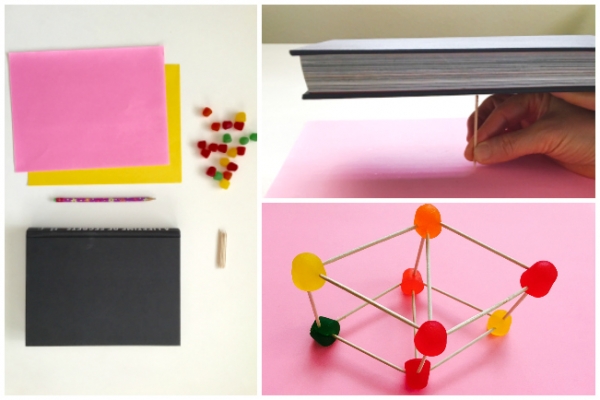
Children are natural-born engineers. They love to build and take things apart, only to put it back together. When they play with Magna-Tiles, Legos or other building blocks, they are in fact taking what they know about math and science (that two triangles make a square, for instance) and using it to solve a problem. STEM activities for kids help them do this and encourage learning through play.
The earlier you can encourage your child to think like an engineer the better. The engineering design process removes the stigma from failure and teaches instead that failure is an important part of the problem-solving process. Equally important, it teaches kids that there is no one "right answer" to a problem. Because engineering can be found everywhere, in the way that water flows out of a spout, or the way sounds echo in tunnels, it’s never too early to incorporate the engineering design process into a child’s life.
This gumdrop structure challenge is one way to get those engineering juices flowing. STEM activities for kids help with building intelligence and memory and this is exactly what this project does.
1. You’ll Need:

- 20-40 gumdrops
- 10-20 toothpicks
- Paper
- Textbook
- Pencil, pen or other writing utensil
- Scissors
2. Blunt toothpick ends:
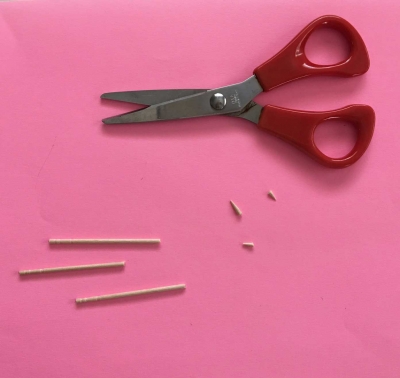
Cut off the pointy ends of toothpicks using scissors to ensure safety.
3. Provide Instructions:

Give these directives and set your children off to build:
"Using gumdrops and toothpicks, build a house-like structure to support a textbook. The textbook must be raised from surface by height of toothpick."
4. Build structure:
For younger children, guide them through the building process by asking them to build the structure first in the shape of a square, triangle and diamond. Children 8 years and up might not need any guidance. Encourage them instead to sketch their ideas first.
The challenge can vary in level of difficulty by limiting the number of gumdrops and toothpicks or choosing a lighter or heavier book. Since the gumdrops can be sticky, you may want to work on top of a disposable surface like a piece of paper.
5. Pause and reflect:
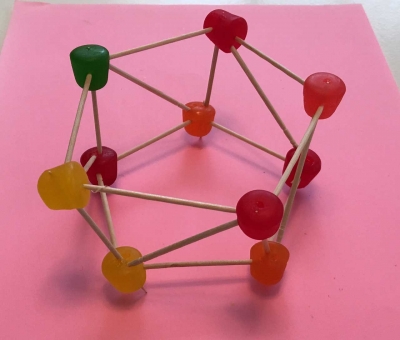
After each attempt at a shape, take a moment to ruminate with your child. The cube is the shape most children attempt first, but squares are weak and will not likely hold weight of a textbook.
Ask questions like ‘what can be done to strengthen it?’ The big takeaway ideas from this exercise are that triangles are strong and a larger base provides sturdier support.
6. Try again:
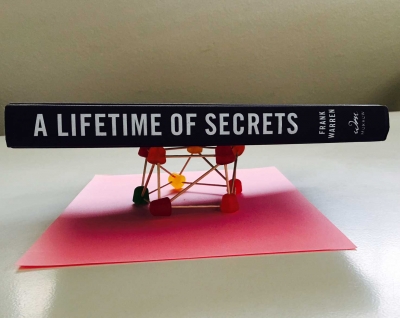
Encourage your child to add toothpicks or gumdrops to an existing shape or make a structure using a different shape altogether.
Check out these fun 15 Science Activities for Preschoolers afterwards! Or if you're looking for a fun summer activity, go on a Playtime Edventure!