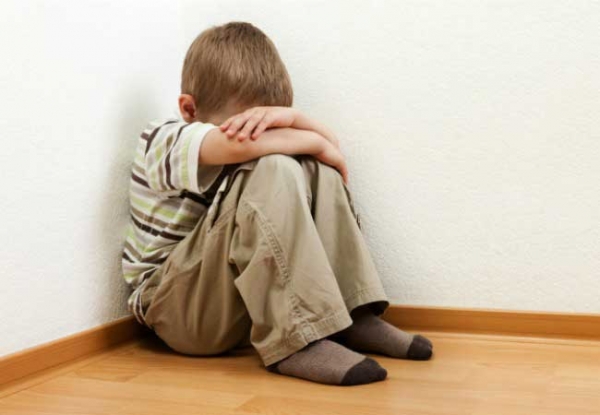
We’ve gotten pretty creative with our punishments and consequences. There are books and Pinterest boards dedicated to finding the neatest way to make your kid pay for their poor choices. Remember the “get along” shirt that became a popular trend, or the “uh-oh” ransom bin? The problem with our pursuit of creative punishments is that it’s focusing all of our attention on the wrong goal. Discipline shouldn’t be about the coolest and most creative way to punish our children but about the best way to reach their hearts. Lasting positive change occurs when kids feel good about who they are plus are empowered with skills and tools to do the right thing.
I’m afraid we’ve become so dependent on tricks to manipulate our kids’ behavior that we’re entirely missing what’s going on underneath. I think we are simply following the advice we’ve been given. We are good, loving parents trying our best to raise good, loving children, and our society has normalized this kind of behavior management, but I think we ought to take a time-out from the creative consequences and look into the eyes and hearts of our little humans. I think we should get more concerned about soul connection than behavior correction because, really, it’s in that soul connection that our true authority and influence lies – not in the oversized shirts and creative Wi-Fi password contracts.
- I’ve discussed time-in extensively in other articles as I feel it is the perfect segue into positive parenting. I recommend time-in for children ages 2 to around 7. For the younger end of this age range, using the calming strategies to regulate the emotional system is the main goal while the older group can begin working on problem-solving. You can read about why time-in works and how to do it in these articles:
Replace the Time-Out Chair for a Calm-Down Area
How to Use Time-In as a Discipline Alternative to Time-Out
- Try a paper discussion which feels less confronting to some kids than a verbal reprimand. State your feelings along with your concern on a piece of paper and hand your child the paper and pencil. Give them space to write a reply. You can even have them slide it under your door or leave in a designated area. One of my children seems to comprehend and open up more with paper discussions than verbal ones. Recently, when an argument erupted over math homework which resorted to yelling, our paper discussion went like this:
Parent: I feel upset that you yelled at me. I was only trying to help you with the math problem.
Kid: I’m sorry. I was just frustrated with homework.
Parent: I get it. It frustrates me too, but yelling isn’t the best way to respond to frustration. What else can we do?
Kid: Take a break?
Parent: Good idea. Let’s do that next time.
Kid: OK.
If words seem to further irritate your child, grab a sheet of paper and see what happens.
- Offer a positive alternative. Many times, what we see as misbehavior is just normal exploration and learning, such as trying to scale the shelves, jumping on the couch, throwing food, and reaching toward the stove. There needs to be boundaries as some of those behaviors are dangerous, but rather than scold and punish, we can understand that, developmentally, our child isn’t calculating ways to drive us mad but is simply being an immature child, and we can then offer a positive alternative. “You can’t jump on the couch, but we can pull a cushion onto the floor.” “If you’re throwing food, I guess you aren’t hungry right now. We’ll try again later. Here’s a soft ball you can throw. I’ll catch it!”
- Take a breather. When tensions are high, the tendency is to overreact. It’s a good possibility that the issue is not as a big a deal as it seems in the moment. Give it time for cooler heads to prevail and revisit later.
- Work on your relationship. Kids often act out when they feel disconnected or bad inside. Filling up your child’s emotional tank is better at improving behavior than 100 punishments. Jan Hunt, director of the Natural Child Project, says these three things fill a child’s emotional tank: Eye contact, gentle touch, and undivided attention. I can’t stress it enough, children behave better when they feel better.
- Let your child choose the consequence. I don’t mean they get to choose between going to bed early, losing the iPad, or missing next week’s allowance. What I mean by letting your child choose the consequence is that you put the responsibility on your child to right her wrong and empower her make amends. This helps children save face and feel good about themselves in the end, rather than feeling bad and resentful from punishment. It also helps them to focus on how their behavior affects others rather than focusing on how your behavior affects them. An example is that, in a solutions-oriented discussion about how teasing his sister made her feel, he might come up with three solutions. One would be to write her a sorry note, another would be a verbal apology, and a third might be to do something nice for her that day. Whichever one he chooses is going to be more valuable than 5 minutes in time-out.
There are consequences to our choices, and this is an important lesson for kids to learn. However, when we try to get creative with consequences, it becomes more about our power than about the real lesson. Consequences will come either naturally or through the repair and problem-solving process, and while it probably won’t result in a viral post, our children will learn the lessons without dragging behind a sack of shame or negative feelings.